

The GTM Stack: What to Build, What to Drop, What to Fix

Every growing business has a Go-To-Market stack.
The question is whether it's intentional.
Over time, companies accumulate:
New marketing channels
Additional sales tools
CRM integrations
Automation platforms
Reporting dashboards
Customer success workflows
Each addition promises better performance.
But more tools don't necessarily create a stronger Go-To-Market strategy.
In many cases, they create complexity.
The highest-performing organizations don't build bigger GTM stacks. They build better ones.
What Is a GTM Stack?
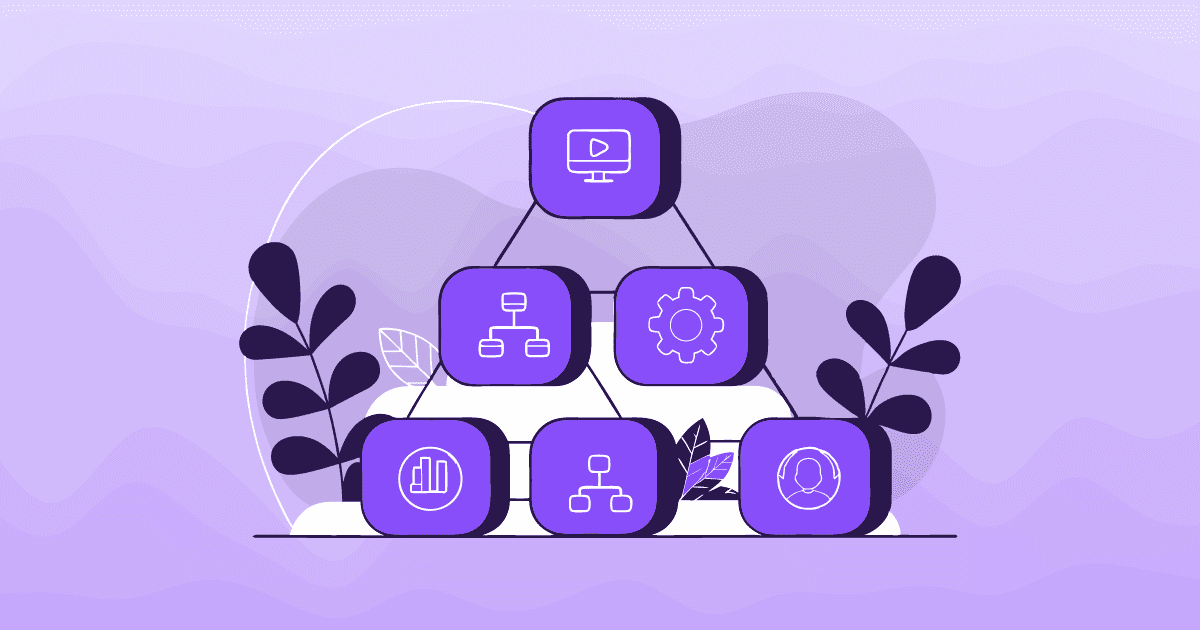
A Go-To-Market (GTM) stack is the combination of:
Strategy
Processes
Technology
Data
Teams
that work together to attract, convert, and retain customers.
Technology is only one layer. Without the right structure, even the best platforms fail to deliver results.
The Problem Isn't Missing Tools. It's Misalignment
Organizations often assume that growth requires:
Another CRM integration
Another AI platform
Another marketing channel
Another automation
But growth rarely stalls because of missing software.
It stalls because existing systems aren't working together.
Disconnected processes create disconnected customer experiences.

Signs Your GTM Stack Needs Attention
You may have outgrown your GTM stack if:
Marketing generates leads sales won't pursue
Customer information lives in multiple systems
Teams create duplicate work
Reporting tells different stories depending on the department
Automation exists, but requires constant manual intervention
Leadership lacks visibility into the full customer journey
These aren't technology problems. They're system design problems.
The GTM Audit: Build, Drop, or Fix
Before investing in new tools, evaluate every part of your GTM stack using three simple questions.
1. What Should You Build?
Focus on capabilities your business genuinely needs.
Examples include:
Better Customer Visibility
Can every team access the same customer information?
If not, building a unified view creates immediate value.
Stronger Operational Workflows
Clear workflows improve:
Lead handoffs
Sales processes
Customer onboarding
Account management
Technology should reinforce these workflows—not replace them.
Reliable Reporting
Leaders need metrics they trust.
Build reporting that supports decisions rather than simply generating data.
2. What Should You Drop?
Growth often means simplifying—not expanding.
Consider eliminating:
Duplicate Tools
If multiple platforms solve the same problem, complexity increases while adoption decreases.
Low-Value Automations
Automation that saves seconds but creates confusion isn't an improvement.
Every automation should have measurable business value.
Unnecessary Processes
Ask:
"If we removed this step today, what would actually happen?"
Many organizations discover they are maintaining activities simply because they've always existed.
3. What Should You Fix?
Some systems don't need replacing.
They need alignment.
Focus on:
Team Handoffs
Marketing, Sales, Customer Success, and Operations should share information, not recreate it.
Data Quality
Poor decisions often result from inconsistent data rather than insufficient data.
Clean information supports better execution.
Customer Journey Gaps
Evaluate every transition:
Marketing → Sales
Sales → Onboarding
Onboarding → Customer Success
These moments often create the greatest friction.
Technology Doesn't Create Alignment

Many organizations believe digital transformation begins with software.
In reality, transformation begins with process design.
Technology should support:
Clear ownership
Defined workflows
Shared metrics
Consistent execution
Without those foundations, new tools simply digitize existing inefficiencies.
The Best GTM Stack Is the One Your Team Actually Uses
An effective GTM stack isn't measured by the number of platforms.
It's measured by how well they work together.
Ask yourself:
Can teams collaborate easily?
Is customer information consistent?
Are workflows repeatable?
Can leaders make confident decisions from available data?
If the answer is no, the solution isn't necessarily buying more software.
It's redesigning the system.
A Practical GTM Stack Review Framework
When evaluating your Go-To-Market infrastructure, assess five key areas:
1. Strategy
Does every team understand:
The target customer?
The value proposition?
The growth priorities?
2. Processes
Are workflows:
Documented?
Repeatable?
Consistently followed?
3. Technology
Do your tools:
Integrate effectively?
Support execution?
Eliminate manual work?
Or do they create additional complexity?
4. Data
Can leadership trust the information being used to make decisions?
Visibility is only valuable if it's accurate.
5. People
Even the best GTM stack fails without adoption.
Ensure teams understand:
Their responsibilities
Shared objectives
How the system supports their work

A Strong GTM Stack Evolves With the Business
What works during launch won't necessarily support growth.
As organizations scale, their GTM stack should evolve by:
Removing unnecessary complexity
Improving cross-functional alignment
Strengthening operational visibility
Supporting better decision-making
Growth isn't about collecting more tools.
It's about building a more connected system.
LeapView POV: The Strongest GTM Stack Isn't the Biggest, It's the Most Connected
Many businesses measure their Go-To-Market maturity by the number of platforms they use.
We believe maturity is measured differently.
At LeapView, we view the GTM stack as an operating system—not a software collection.
That means:
Aligning strategy before selecting technology
Designing workflows before automating them
Connecting teams through shared processes and data
Continuously refining the system as the business grows
Because sustainable growth isn't powered by more tools. It's powered by better connections between people, processes, technology, and execution.
Build a Go-To-Market System That Works as One
Explore how LeapView helps organizations evaluate, simplify, and optimize their Go-To-Market stack to support scalable growth and operational alignment.
Related Insights